
1.
Founder’s Voice by Gaston Chee
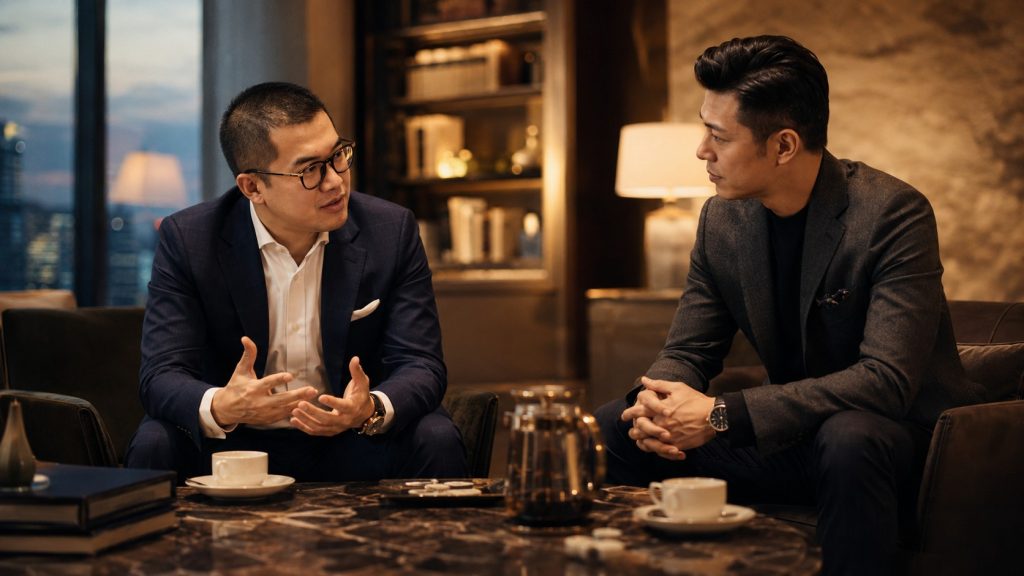
A few days ago, I was speaking with a good friend.
He is the founder of a publicly listed education company. Like me, he was educated in the UK, so our conversations tend to move quite naturally between business, education, culture, family, and philosophy.
At one point, he said something that stayed with me.
“做教育,不能太深入地介入别人的因果。”
In English, it roughly means: in education, one should not step too deeply into another person’s karma, fate, or consequences.
He said it partly as a joke, partly as a piece of hard-earned business wisdom. Then he added, perhaps this is also why his company was able to standardise, scale, and eventually go public.
I understood what he meant.
To build a large education company, boundaries matter. Systems matter. Standardisation matters. A founder cannot turn every child’s confusion into a personal mission. An organisation cannot absorb every family’s anxiety, pain, or dysfunction as if it were its own.
From a commercial point of view, he was not wrong.
But as we continued talking, I realised that BeGo was built from a different belief.
We are not here to recklessly interfere with another person’s fate. But neither are we here to watch a child drift from a safe distance and call that wisdom.
2.
There is wisdom in the warning not to step too deeply into another person’s 因果.
From a Buddhist perspective, karma is not merely a mystical word. It is closely connected with intention and action. In one early Buddhist teaching, the Buddha is recorded as saying that “intention” is karma; through intention, one acts by body, speech, and mind. [Aṅguttara Nikāya 6.63]
That matters.
It means karma is not simply “fate” in the passive sense. It is not a sentence written once and forever. It is a living relationship between intention, action, habit, environment, timing, attachment, and consequence.
.
So yes, when people say, “Do not step too deeply into another person’s karma,” there is truth in it.
It warns us not to help from ego.
It warns us not to confuse control with compassion.
It warns us not to turn another person’s life into our own emotional project.
It warns us not to force someone to grow before they are ready.
It warns us not to mistake our own anxiety for another person’s salvation.
.
But a partial understanding of karma can also become a very elegant excuse for distance.
Some people call it wisdom when it is only self-protection.
Some people call it respect for fate when it is fear of responsibility.
Some people call it non-interference when, in truth, they simply do not want to carry the cost of caring.
I have even heard a darker version of this thinking: that if a teacher helps a student too deeply, he may consume his own good fortune, damage his own luck, or even shorten his own life.
That may sound strange in English, but in parts of Asian culture, people do sometimes speak about fate, fortune, and personal energy in this way.
I understand the caution. Education can be emotionally costly.
.
Anyone who has worked closely with young people and families knows that good intentions alone are not enough.
A teacher without boundaries can burn out. A mentor without structure can become entangled. A founder without discipline can turn care into chaos.
But if an educator is so afraid of losing his own luck that he cannot stretch out a hand when a young person is falling, then what he is protecting may not be wisdom.
It may simply be self-preservation.
A good teacher is not a martyr.
A good mentor is not a saviour.
A serious education system should not be built on emotional exhaustion.
That is precisely why structure matters.
3.
At BeGo, we do not believe in chaotic intervention. We believe in architecture.
Care without structure can become noise.
Compassion without judgement can create dependency.
Advice without follow-through can become another form of performance.
.
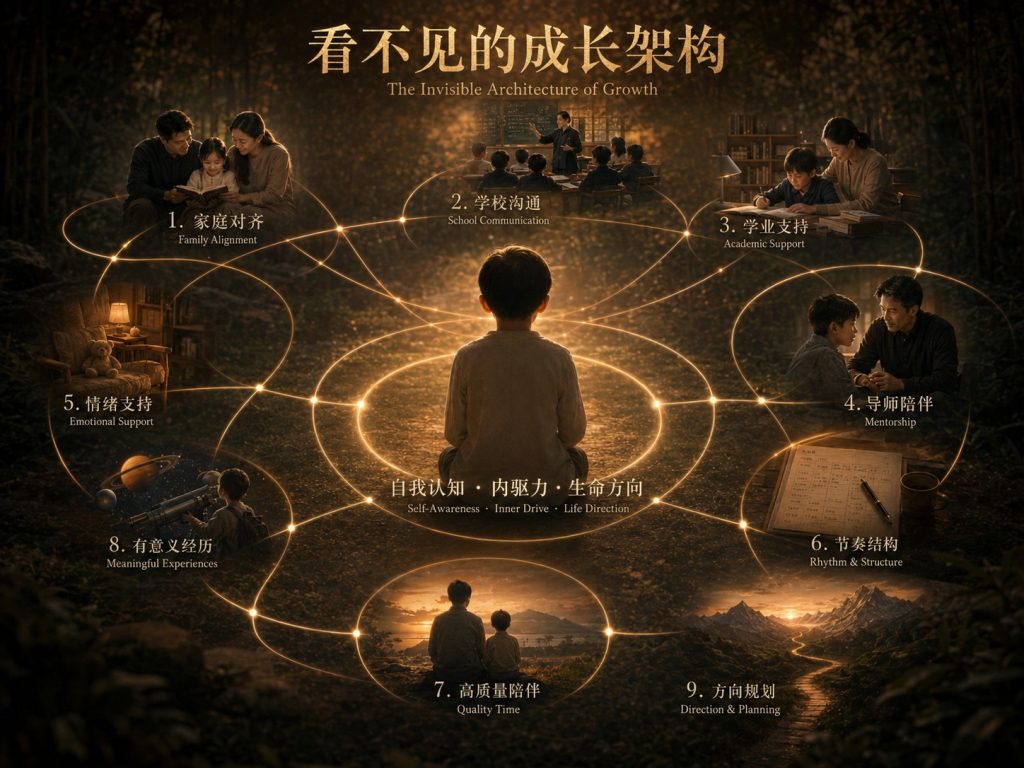
What we try to build is an architecture of change.
A child may appear to need tutoring, but underneath there may be a lack of routine, confidence, ownership, family trust, school communication, or emotional safety.
A parent may appear to be asking about grades, but underneath there may be a deeper anxiety: about character, discipline, the next generation, family legacy, or whether the child is truly growing into someone who can carry responsibility.
A school issue may appear to be about one teacher or one report, but underneath it may be a communication gap, a misunderstanding of the international education system, or a family not knowing how to activate the value of a school they are already investing in.
This is where education becomes more than lessons.
It becomes diagnosis.
It becomes sequencing.
It becomes mentorship.
It becomes school communication.
It becomes family alignment.
It becomes the careful design of an ecosystem around a young person.
4.
That is why I do not see BeGo as simply a tutoring company or an admissions agency. We describe our work as a Private Family Education Office – an education-focused family office for the next generation.
A family office protects and organises financial capital. Our work is to help families protect and develop something even more important: the human capital of the next generation.
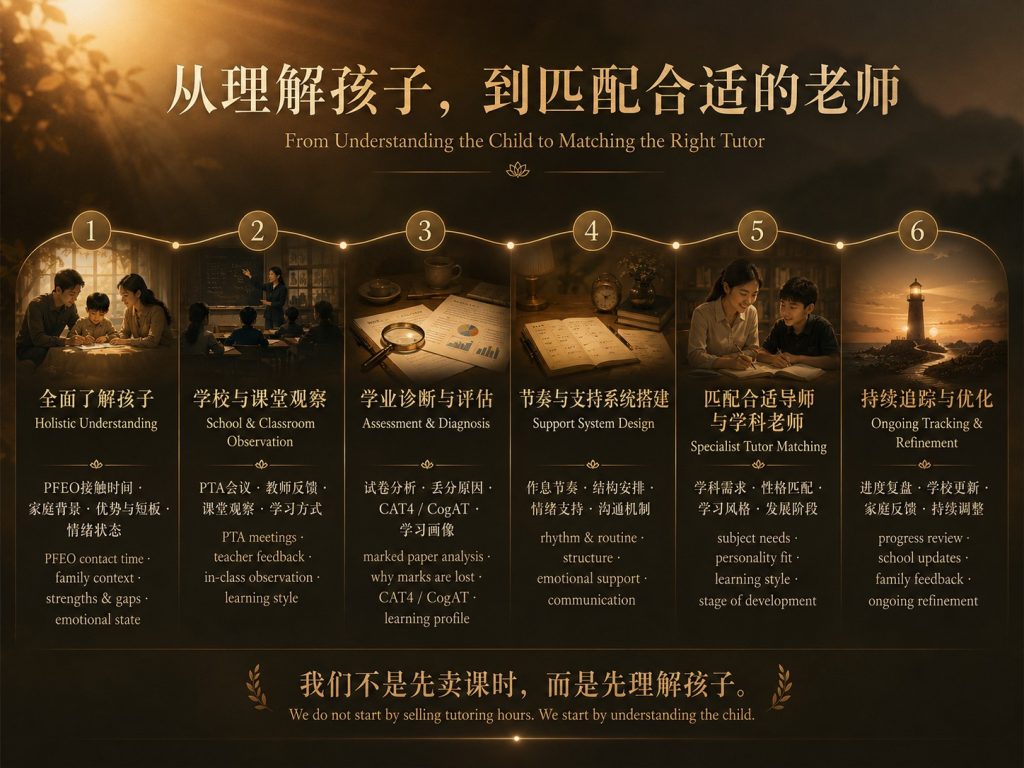
This becomes especially clear in subject tutoring. BeGo does not begin by selling tutoring hours and then assigning a teacher.
.
We first try to understand the child through the PFEO structure: close contact with the family and school, PTA and parent-teacher conversations, teacher feedback, homework and assessment records, marked papers, and a careful analysis of where marks are lost and why. Where useful, we may also observe how the child learns in class, and draw on diagnostics such as CAT4, CogAT and other assessments to build a fuller learning profile.
Only after we understand the child’s learning style, cognitive profile, subject gaps, temperament and developmental stage do we match the right specialist tutor or mentor. The teacher is then not meeting an abstract student, but a child whose context has been properly understood. Tutoring becomes more than content delivery; it becomes personalised support shaped by background, rhythm and purpose.
5.
In Chinese tradition, Confucius said, “有教无类” – in teaching, there should be no distinction of class. [The Analects, Wei Ling Gong]
The line is often understood as a statement about access to education. But I think it also speaks to something more subtle.
Education should not only serve the child whose struggle is visible.
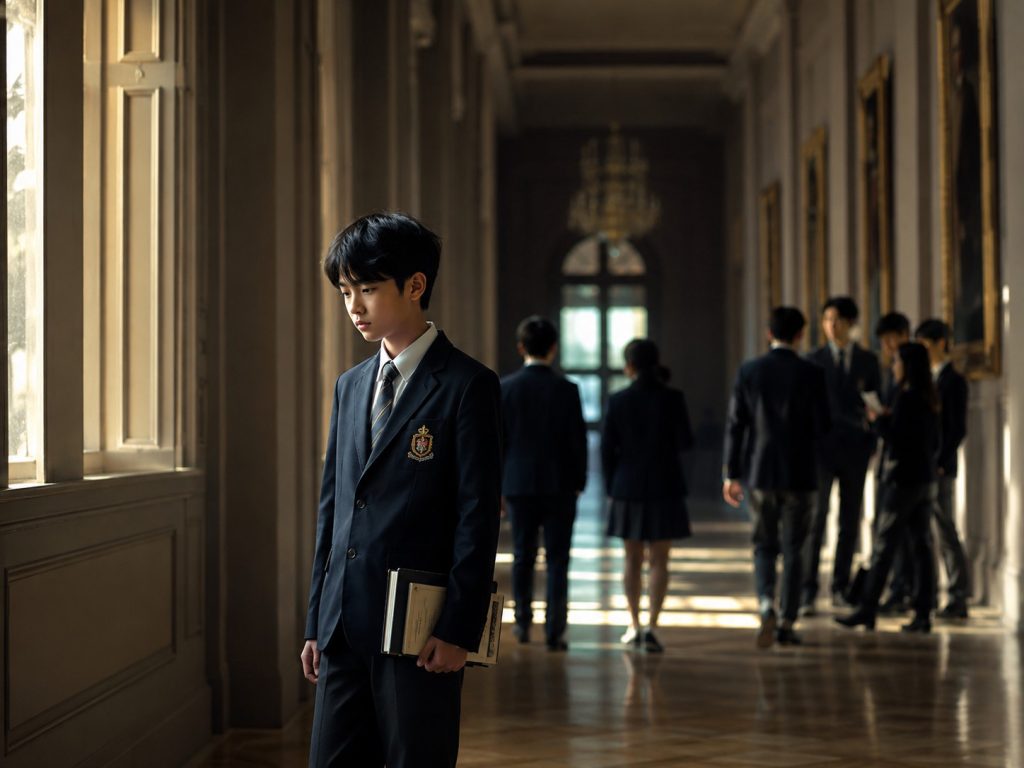
It should also serve the child whose struggle is hidden behind privilege.
The privileged child can also be lost.
A child surrounded by resources can still lack structure.
A child in an international school can still fail to understand the value of international education.
A child living in comfort can still be poor in discipline, confidence, meaning, emotional safety, or self-knowledge.
.
Poverty and problems exist in every class. They simply appear in different forms.
Some children are poor in resources.
Some are poor in love.
Some are poor in boundaries.
Some are poor in courage.
Some are poor in purpose.
Some are poor in the ability to turn privilege into responsibility.
This is not an argument that privilege is the same as suffering, or that resources do not matter. It is simply a reminder that education deals with human beings, not labels.
To only see the visible poor is, in another way, a kind of blindness.
There is an old Buddhist parable of the blind men and the elephant. Each man touches only one part of the animal and then insists that the whole elephant must be like the part he has touched. One touches the ear and describes the elephant one way. Another touches the leg and describes it another way. Each sees only a fragment, but each speaks as if he has understood the whole. [Tittha Sutta, Udāna 6.4]
.
This happens in education all the time.
Some people see only money, so they assume there is no pain.
Some people see only privilege, so they assume there is no struggle.
Some people see only school fees, overseas holidays, private tutors, and beautiful homes, so they assume the child must be fine.
But to see only one part of a child’s life and call it the whole truth is not wisdom.
It is partial sight.
Sometimes it is blindness.
And sometimes, more seriously, it is ignorance disguised as moral clarity.
If we only help the visibly disadvantaged child, we may look noble. But if we ignore the privileged child who is quietly lost, we are still failing the meaning of education.
6.
This is also why the Chinese idea of 因材施教 matters.
The Ministry of Education’s idiom dictionary defines 因材施教 as teaching differently according to the learner’s different qualities and capacities. [Ministry of Education Dictionary of Chinese Idioms]
To teach well is not to apply the same formula to every student.
It is to understand the material in front of you: the child’s temperament, family background, school context, emotional pattern, strengths, weaknesses, timing, and readiness.
In today’s complex family education, 因材施教 is no longer only about the student.
It must also mean understanding the family.
Understanding the school.
Understanding the timing.
Understanding when to step forward, when to step back, when to challenge, and when to wait.
.
My mother has always said something simple: do your part to the best of your ability.
I think about that often.
In education, doing our part does not mean controlling another person’s fate. It does not mean forcing a family to be grateful. It does not mean carrying consequences that do not belong to us.
It means that when we see a child who genuinely needs help, we do not pretend not to see.
We do our part.
We build the structure.
We speak the difficult truth when necessary.
We create the conditions.
We protect the child’s dignity.
We give the family a chance to reorganise.
.
Whether a family cherishes that help, whether parents are grateful, whether they honour the relationship properly – that is another matter.
That belongs to their own moral account.
In Buddhist language, karma belongs first to intention and action. One cannot outsource the consequences of one’s own conduct. If a person receives kindness and responds with arrogance, ingratitude, or betrayal, that also becomes part of his own karma.
There is a Buddhist teaching that a person of integrity is grateful and thankful, while ingratitude belongs to a person of no integrity. [Kataññu Suttas, Aṅguttara Nikāya 2.31-32]
.
There is also an old Chinese family-ethics line from the Book of Changes:
“积善之家,必有余庆;积不善之家,必有余殃.”
A family that accumulates goodness leaves blessings beyond itself; a family that accumulates what is not good leaves consequences beyond itself. [Book of Changes, Kun / Wenyan]
That is a wiser way to understand karma.
Karma is not a reason for the teacher to refuse help.
Karma is a reminder that everyone must eventually meet the consequences of how they receive help, how they treat others, and how they cultivate their family culture.
.
Western philosophy gives us a similar image.
In Plato’s Republic, education is not described as simply putting knowledge into someone’s mind.
It is the turning of the soul – from shadows toward light, from illusion toward understanding. [Plato, Republic Book VII]
That has always stayed with me.
Education is not filling a child with information.
Education is turning the direction of the soul.
7.
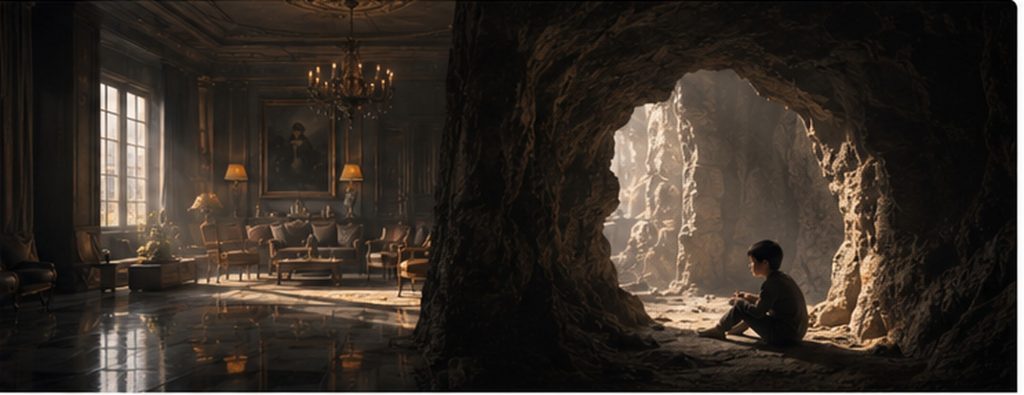
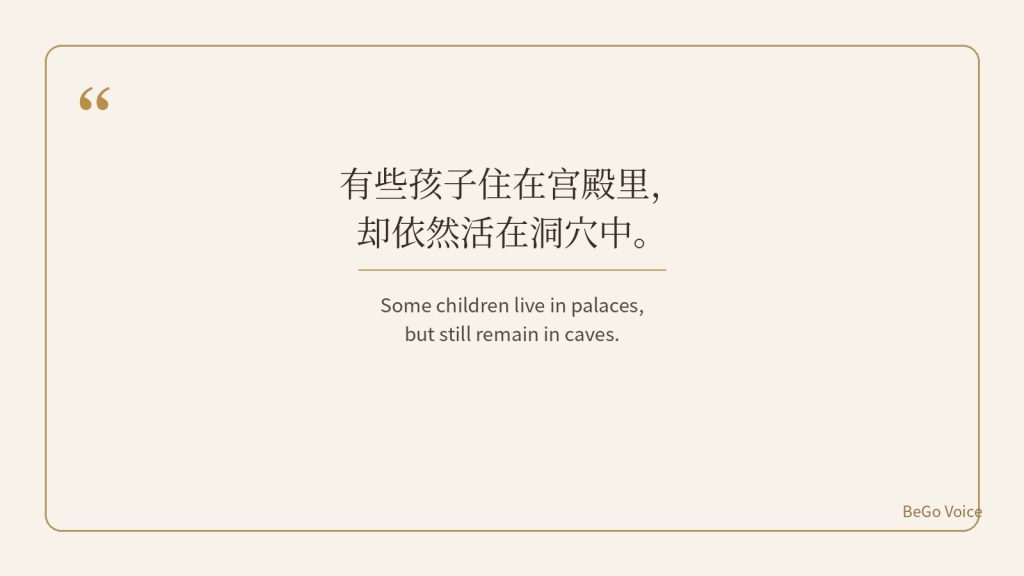
Some children live in palaces, but still remain in caves.
They may have excellent schools, beautiful homes, overseas holidays, private tutors, and global opportunities. But internally, they may still be facing shadows: fear, distraction, online addiction, emotional distance, family pressure, lack of discipline, lack of meaning, or lack of self-belief.
Marcus Aurelius, the Roman emperor and Stoic philosopher, once wrote that where a person can live, he can also live well – even in a palace. [Meditations, 5.16]
That line is important because a palace does not automatically make life good. Even inside power, comfort, and abundance, a person still has to learn how to live rightly.
Privilege is not wisdom.
Comfort is not happiness.
Access is not character.
Resources are not inner order.
.
Money can buy lessons.
It cannot buy ownership.
Money can buy access.
It cannot buy judgement.
Money can buy comfort.
It cannot buy purpose.
Money can open doors.
It cannot make a young person walk through those doors with discipline, humility, confidence, and responsibility.
.
That is where good education still matters.
In the Christian tradition, there is the image of the lost sheep. In Luke 15, the shepherd leaves the ninety-nine to search for the one that is lost until he finds it. [Luke 15:3-7]
I have always found that image moving.
But the lost sheep is not always the poorest sheep.
Sometimes the lost sheep is the one no one thinks is lost.
Sometimes it is the child with the best school, the best house, the best resources, and the least visible pain.
From the outside, the child may not look like a problem. But inside, he may be drifting – from his family, from his studies, from his confidence, from his future, and sometimes from himself.
.
To help such a child requires more than technical competence.
It requires empathy.
It requires judgement.
It requires patience.
It requires boundaries.
It requires the humility to know that we cannot walk the path for the child, and the courage to build the bridge when the child cannot yet see the other side.
8.
This is why I do not see education as merely a scalable product.
I respect scale. I respect listed companies. I respect founders who can build large systems and serve many people.
But I have never believed that becoming the biggest is the only meaningful answer for an education company.
Some companies become large by reducing complexity.
.
BeGo exists because some families cannot be helped unless someone is willing to hold complexity.
Not every problem can be solved by another course.
Not every child can be awakened by another lesson.
Not every family can be supported by a standard package.
.
Some families need judgement.
Some need translation between parent and child.
Some need better communication with the school.
Some need a mentor who can enter the child’s world without being swallowed by it.
Some need structure where there has only been anxiety.
Some need hope, but not false hope.
.
Hope, in difficult cases, cannot remain a slogan.
Hope must be designed.
Hope must be executed.
Hope must be reviewed.
Hope must be carried by people, systems, conversations, and trust.
.
I have no appetite for moral theatre.
I did not build BeGo to appear noble. I do not have the capacity, nor the desire, to “save” hundreds of thousands of families.
A country has its governance.
A family has its rules.
A company has its founder’s vision.
Every family we meet is 缘分 destiny – a form of encounter, timing, and trust.
But destiny is not only about how people meet.
It is about how people honour what happens after they meet.
There is no simple beginning or ending to destiny.
There is only whether we know how to cherish it, cultivate it, protect it, and not betray it.
At BeGo, we do not try to serve every family.
We try to serve the right families deeply, carefully, and responsibly.
9.
One child at a time.
One family at a time.
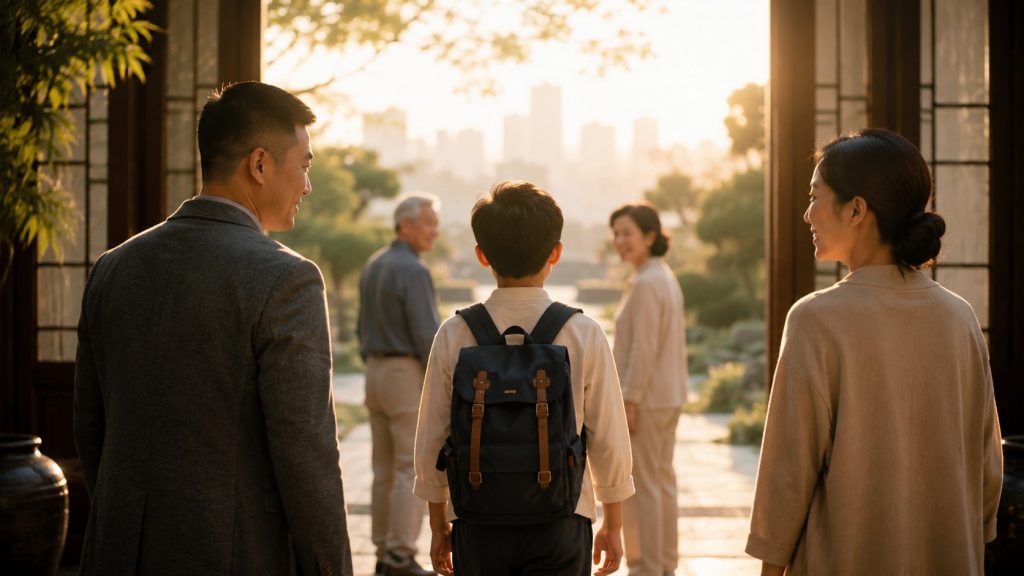
One generation at a time.
Because when a child’s trajectory changes, the impact rarely stops with the child.
A calmer child changes a family.
A more responsible child changes the next generation.
A better-supported family changes the way resources are used.
A young person who grows in judgement, discipline, confidence, and purpose may one day carry not only himself, but also his family, his community, his business, and perhaps a small part of society forward.
.
The future of a country is not shaped only by policy, capital, technology, or institutions.
It is also shaped quietly inside families.
In dinner conversations.
In school meetings.
In moments of conflict.
In the way parents learn to let go without giving up.
In the way a child learns to take ownership without feeling abandoned.
In the way one generation prepares the next.
So yes, I understand the warning: do not step too deeply into another person’s karma.
But education, at its best, is not interference.
It is not control.
It is not saviour ego.
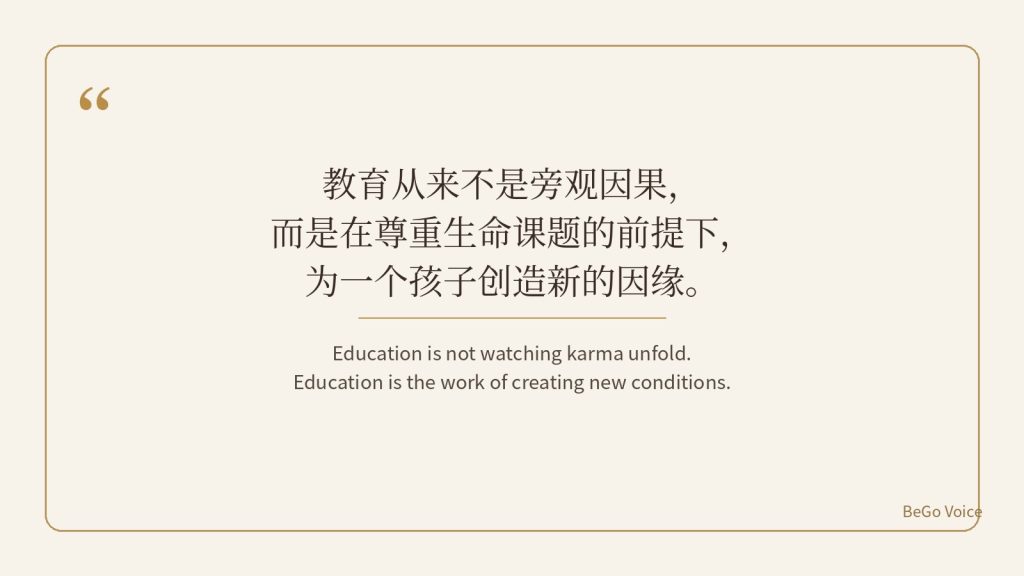
It is the disciplined act of creating new conditions.
.
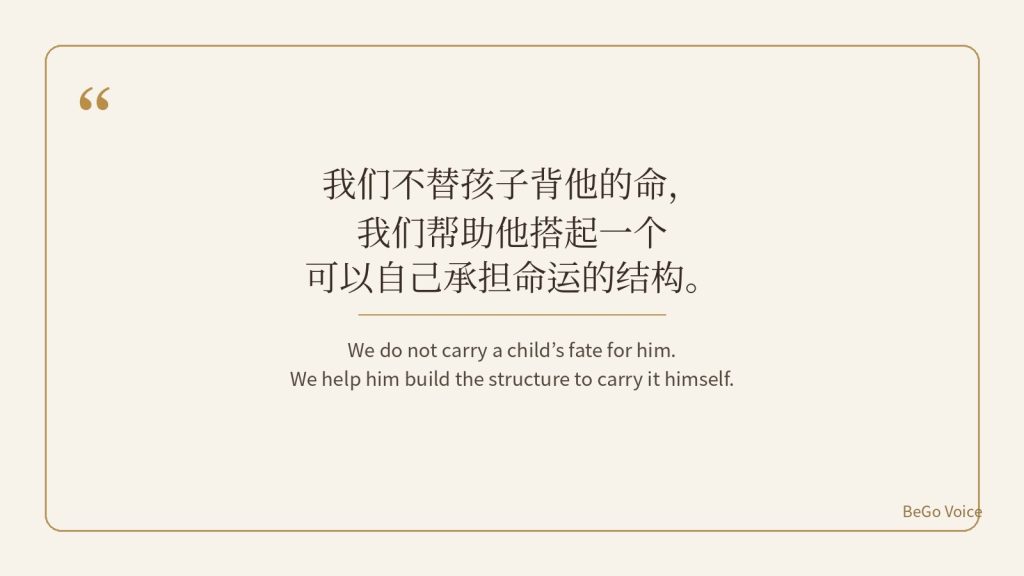
We do not carry a child’s fate for him.
We help him build the structure to carry it himself.
We do not replace a family’s responsibility.
We help the family reorganise its love, expectations, communication, and resources into something more constructive.
We do not claim that destiny can be changed by slogans.
But we believe that when causes and conditions are reorganised, a child’s trajectory can change.
.
And when one child changes, a family’s next generation may begin to move toward a different future.
That is the architecture of change.