
Source: screenshot from UCAS website
Recently, UCAS (Universities and Colleges Admissions Service) released its latest applicant data for the 2026 UK undergraduate admissions cycle, based on applications received by the close of the main application cycle on 30 June. ([UCAS][1])
Several key facts stand out for students who are planning to study in the UK:
Source: screenshot from UCAS website
1.UK Undergraduate Applications Reach a Record High
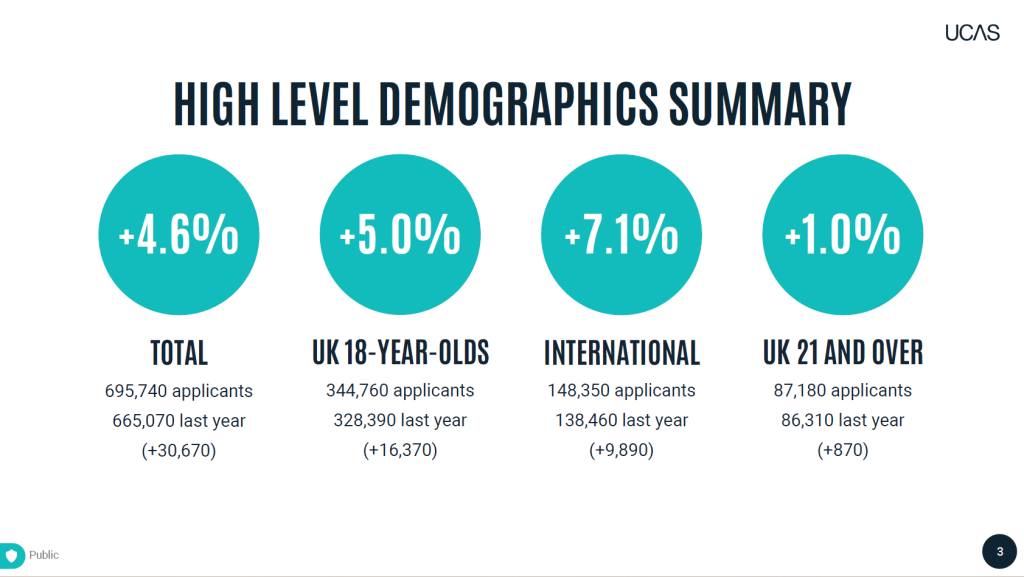
The total number of applicants for UK undergraduate courses reached a record high of 695,740, up 4.6% from last year. ([UCAS][1])
Applicants from UK 18-year-olds increased by 5%, while applications from UK mature students aged 21+ increased by 1%. ([UCAS][2])
What it means:
- More students are entering the UK university application system including those living in the UK.
- Families have to navigate a more competitive and complex higher education environment.
Source: screenshot from UCAS website
2.International Demand Continues to Rise
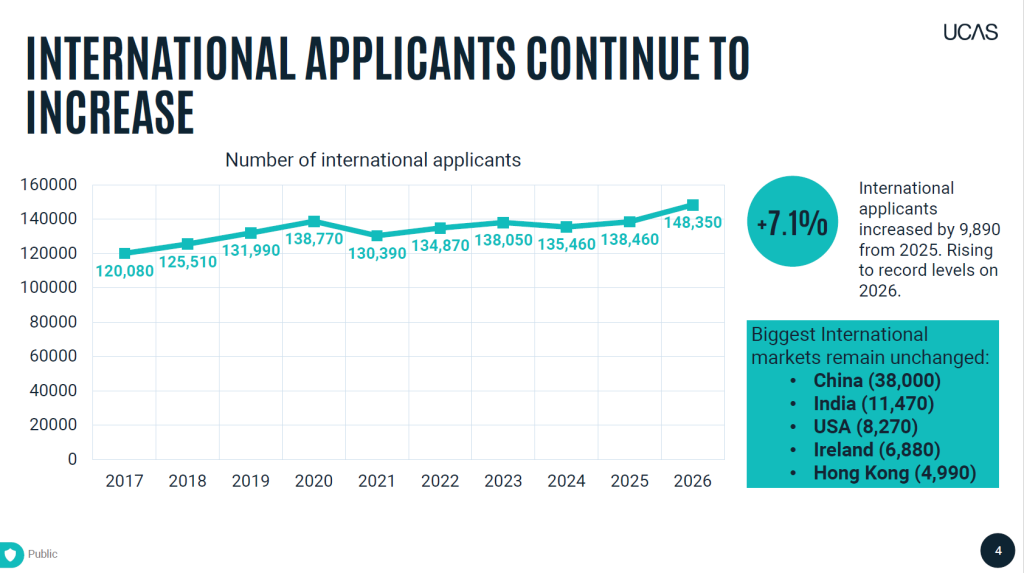
International applicants increased by 7.1% year-on-year to a new high of 148,350, representing the fastest annual growth in international UCAS applicants in more than a decade. ([British Council][3])
China remained the largest international applicant market, with 38,000 applicants, 12% higher than the previous year, followed by India, USA, Ireland and Hong Kong. ([UCAS][4])
- What it means: More families around the world are considering UK higher education as part of their children’s future pathways.
- Students must demonstrate their strengths and distinguish themselves within an increasingly competitive global applicant pool.
Source: screenshot from UCAS website
3.Which Subjects Are the Most Popular?
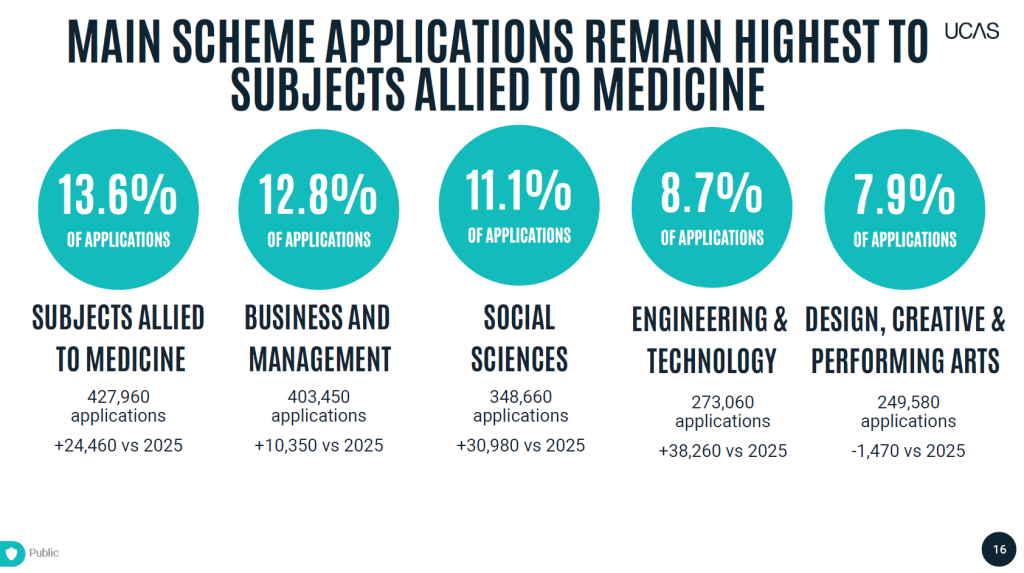
The UCAS report also revealed the application trends across different subjects areas.([UCAS][1])
What it means:
Many parents want their children to apply for the most popular subject choices.
From BeGo’s perspective:
- Choosing a subject should not simply be about following popular trends.
- It should be a thoughtful decision that considers each student’s interests, abilities, personality, and long-term development goals.

This is not only about getting in — it is about standing out
When families see headlines about rising university applications, their question is:
- Will it become harder for my child to get into a good university?
At BeGo Education, we encourage parents to think beyond the statistics and ask:
- How can my child discover the university pathway that truly aligns with their strengths, interests and aspirations?
- How can they build a journey that reflects their abilities, personality and long-term purpose?
- In an increasingly competitive applicant pool, how can they stand out for who they are?
What it means: For Chinese families, preparing for competitive university pathways requires more than completing an application form. Students need time to build academic confidence, develop their interests and understand their own direction with the help of experts.
Today, competitive universities are looking beyond academic results alone.
They want to understand:
- Why does this student want to study this subject?
- Have they developed genuine intellectual curiosity?
- Have they explored their interests beyond the classroom?
- Can they think independently?
- Can they demonstrate resilience and maturity?
- Do they have a clear understanding of their own direction?
In other words, universities increasingly want to see the whole person behind the application, not simply a collection of grades and achievements.
A Strong Application can’t be built in just a few months
Many families view university applications as a final-stage project.
When students reach Year 12 or Year 13, they rush to start focusing on:
- personal statements
- activities and achievements
- recommendation letters
- university choices
- application strategy
But the reality is: An application is the visible outcome of many years of development.
The strongest applications are built through:
- consistent learning habits
- curiosity developed over time
- meaningful exploration
- guidance from trusted mentors
- experiences that shape perspective
- confidence gained through challenges
- a growing understanding of personal strengths and ambitions
These cannot be created within a few months.
They require time.
They require reflection.
And they require the right support system, guided by experienced education professionals.
Source: screenshot from UCAS website
The Application is the Result. Growth is the Journey.
This is why BeGo Education has never defined itself simply as a school application agency.
Because university applications are only one part of a much longer educational journey.
Whether through BeGo’s PFEO (Private Family Education Office),
Individual Education Plans (IEP), or university application support,
BeGo’s purpose remains the same:
To help families transform education from a series of disconnected decisions into a carefully designed journey of growth, opportunity and direction.
Because the strongest applications are not created through packaging.
They are created through authentic development.
The more important questions are:
Who is this student becoming?
- Are they building strong learning habits?
- Are they developing confidence and independence?
- Are they discovering their strengths?
- Are they exploring areas where they can grow?
- Are they learning how to communicate, reflect and make decisions?
Because these qualities ultimately shape the story a student brings to university, and the success they achieve beyond.
What is the PFEO Architecture?
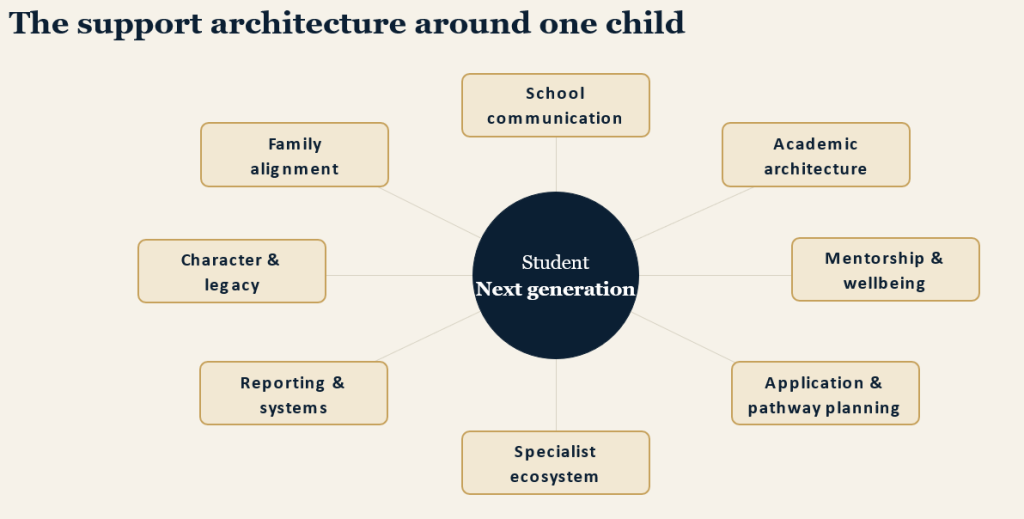
At BeGo, we often talk about our PFEO Education Architecture.
For many families, this concept may initially sound abstract.
But the idea is simple. Imagine a university application as a building. The final application is the visible structure — what people see.
But what determines whether the building stands strong is the foundation and architecture underneath.
Education works the same way.
Grades, achievements and university offers are visible outcomes.
But behind them are the invisible systems that make growth possible:
- long-term learning habits
- thoughtful academic choices
- trusted mentorship & specialist support
- application & pathway planning
- character & interest development
- emotional resilience
- a supportive family rhythm
- effective parent & school communication
This is the PFEO Education Architecture behind each child’s growth, excellence and long-term success.
Final Thoughts
UCAS data changes every year. Applicant numbers rise. Competition evolves. University expectations continue to develop.
But one thing remains constant:
A student’s future is not shaped during the few months of application season.
It is shaped through years of learning, exploration, mentorship and personal growth.
Because an offer letter is only the final message.
The real story is everything that came before it.
The habits built.The questions explored.The challenges overcome.The person the student has become.
This is the work behind the application.
This is the education architecture that BeGo has always believed in.
Be Empowered. Go Beyond.
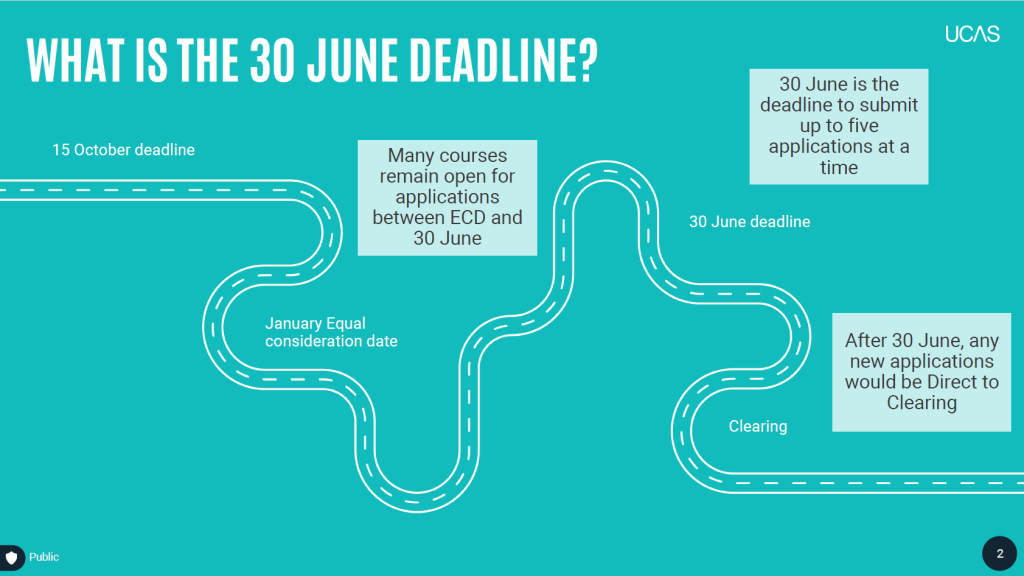
For students applying to start UK undergraduate studies in September 2027, these are the key UCAS deadlines:
| Date | Details |
| 15 October 2026(18:00 UK time) | Early deadline for applications to University of Oxford, University of Cambridge, and most courses in Medicine, Dentistry, and Veterinary Medicine/Science. |
| 13 January 2027 (18:00 UK time) | Equal Consideration Deadline for most undergraduate courses. Applications received by this deadline must be given equal consideration by universities. This is the most important deadline for most applicants. |
| 25 February 2027 | UCAS Extra opens. Students who have used all five choices and are not holding any offers may be able to add another choice in their application. |
| 30 June 2027 (18:00 UK time) | Final deadline for the main UCAS application cycle. Applications submitted by this deadline are still sent to universities through the normal UCAS process. |
| From 1 July 2027 | Applications submitted after 30 June are automatically entered into UCAS Clearing, rather than the main admissions cycle. |
References:
[1]: “2026 cycle applicant figures – 30 June deadline.” UCAS. July 16, 2026.
[2]: “Record number of UK school leavers head into the results period with an offer of a university or college place this year.” UCAS. July 16, 2026.
[3]: “UCAS data shows 7.1% growth in undergraduate applicants.” British Council . July 23, 2026.
[4]: “30 June deadline briefing slides.” UCAS. July 16, 2026.